Wednesday, December 5, 2012

Would Lincoln Have Mattered?


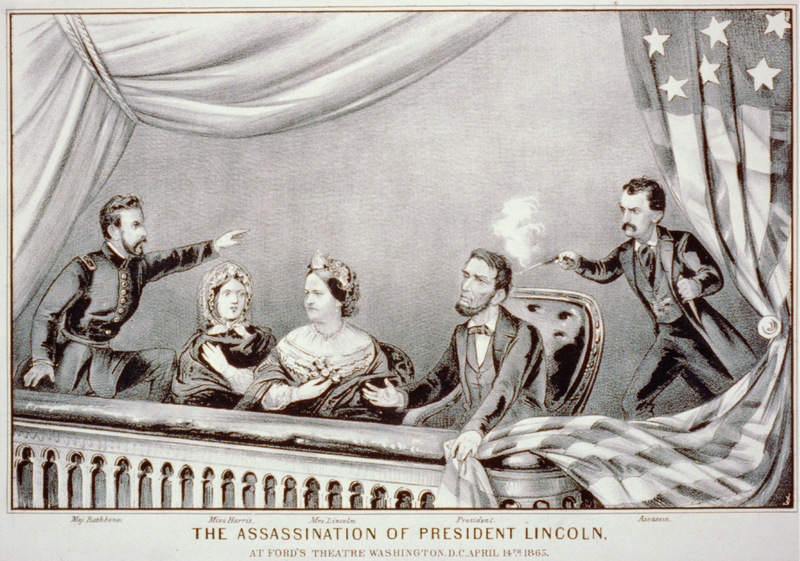
The Reconstruction of the South following the Civil War, and perhaps most influenced by the assassination of Lincoln, which infuriated the Radical Republicans and has largely been seen by most historians as the greatest misfortune to befall the South because now there was vengeance in the eyes of many Northerners, is the topic of this blog.  In looking back over Chapter 22, explain the key factors that defined both the successes and failures of Reconstruction.  As you determine the specific social, political, and economic factors that one could use to frame an argument about the good and the bad aspects of Reconstruction, consider the question posed in the title of this blog, "Would Lincoln Have Mattered?"  That is, would Reconstruction have happened in a fundamentally different way, perhaps better, if Lincoln had not been killed?  That, in and of itself, begs a further consideration:  what ifluence would Lincoln have had if he had merely been wounded and not died?  What if he was mentally crippled from the headshot and survived?  What if John Wilkes Booth had been stopped before he even entered the Presidential Balcony at Ford's Theater, and so Lincoln would never have been shot?  So, consider the history of Reconstruction as it happened as well as how it might have happened if Lincoln had survived and in what condition.

DUE DATE:  Friday, December 7 by midnight.

WORD COUNT:  500 words

Monday, November 26, 2012

Popular Sovereignty or Freedom?


The growing tensions between the North and the South, especially with the South's insistence on being provided security for the institution and perpetuity of slavery, had created a situation in which compromise was becoming harder and harder to make.  The 3/5ths compromise back in 1789 with the Constitution had led to the closing of the African Slave Trade by 1808 by giving the South the voting power to offset that of the North in the House of Representatives.  The Missouri Compromise had maintained this balance of voting power by giving a large chunk of northern territory to the slavery interests with the understanding that there would be no more slavery north of the Missouri Compromise Line from that time forward.  However, as it became clear that the newly acquired American Southwest was inhospitable to big plantations and therefore slavery, there was renewed efforts by those in the South to get ahold of more northern territory using the persistent threat of secession to force the North to agree since most in the North believed in the Union more than they believed in either States' Rights or the abolition of slavery.  Thus, the Compromise of 1850 and then the Kansas-Nebraska Act in which the notion of "popular sovereignty" or "let the people choose" became the means by which Congress could avoid having to make the decision itself.  Indeed, many had called into question whether or not Congress had the power at all to legislate on slavery (either for it or against it or anything inbetween)!  Finally, in a speech given in Peoria, Illinois in 1854, Abraham Lincoln (who would eventually become President in 1860) made the following point in his debates with Stephen Douglas, the "cheerleader" as it were of "popular sovereignty":

The doctrine of self-government is right - absolute and eternally right - but it has no just application, as here attempted.  Or perhaps I should rather say that whether it has such application depends upon whether a negro is not or is a man.  If he is not a man, why in that case, he who is a man may, as a matter of self-government, do just as he pleases with him.  But if the negro is a man, is it not to that extent a total destruction of self-government, to say that he too shall not govern himself?  When the white man governs himself that is self-government; but when he governs himself, and also governs another man, that is more than self-government - that is despotism.  If the negro is a man, why then my ancient faith teachers me that "all men are created equal," and that there can be no moral right in connection with one man's making a slave of another.

Evaluate Lincoln's argument here and contextualize it with regard to the history of compromises made for the benefit of the South at the expense of the Union and its founding ideas of "We the People" and "All Men Are Created Equal."  Show the evolution of Lincoln's point that slavery  actually promotes anti-self-government by showing how these several compromises over history up to 1854 lead to the crisis that the Kansas-Nebraska Act was intended to solve.

DUE DATE:  Friday, November 30 by midnight.

Word Count:  500 words minimum


Thursday, November 8, 2012

Andrew Jackson's Legacy


We have talked in class at great length about the importance of Andrew Jackson not only in his own time but after as well.  In so many ways he shaped and defined the America we now have, from the idea that the average person has a place in government to the distrust of centralized banking.  He was a man torn by personal loss and driven by personal rage, but also a man who simply did not ever give up on anything.  From arming free-blacks in New Orleans in 1815 to forcing the relocation of thousands of Native Americans in 1839, Andrew Jackson is also a man of contradictions that make it nearly impossible to come to a final and perfectly clear portrait of him either in or out of the White House.

Revisit Chapter 13 and the essay on pp.285-86 entitled What Was Jacksonian Democracy? and explain why it is that Jackson is so important to American History.  Compose this response as a summation of everything you believe is crucial to know and understand (knowing a fact is different than understanding its importance) about Andrew Jackson and his impact on American History.

DUE DATE:  Sunday Night, November 11 by midnight.

Minimum Word Count:  500 words

Andrew Jackson (White House):
http://www.whitehouse.gov/about/presidents/andrewjackson

Andrew Jackson (The Hermitage):
http://www.thehermitage.com/jackson-family/andrew-jackson

Andrew Jackson (PBS):
http://www.pbs.org/kcet/andrewjackson/

American Pageant, Ch. 13:
https://docs.google.com/file/d/0B06Mqo8bYnzgX3hrc0lLVGlqX28/edit

Wednesday, October 31, 2012

How I Would Vote And Why - Reflection on Electoral College Assignment

You have been tracking the polls and running scenarios for the upcoming Presidential Election next week and have seen how such an election is fundamentally a "numbers game" rather than a straightforward "whoever gets the most votes" thing.  The Electoral College was put in place to protect the new Executive Branch from the whims of the People who were not trusted to really know what was actually in their best interests.  Thus, there is the Popular Vote and then the Electoral College Vote.

If you were able to actually vote next week, for whom would you vote and why?  Make use of what you have so far learned about the first 18 Presidents and the challenges and obstacles that they each faced from 1789 through 1877 as indicated on your Presidents List.  Considering the present state of affairs as you understand them, how can the past help you come to a decision about who would make the "best" President for the next four years?

DUE DATE:  November 2, 2012 by midnight

Word Count:  300 words minimum

George Washington Music Video with Presidents 2-43:
https://www.youtube.com/watch?v=FZL-19wGnkA

Monday, October 22, 2012

J.Q. Adams vs. Jackson: The Birth of Modern Campaigning


The election of 1824 was fractious to say the least.  In a very important way, it was a defining moment in the evolution of our Constitutional democracy because it pitted the old, Eastern Establishment represented by Adams against the new, Western Anti-Establishment represented by Jackson.  The stakes for both interets were high, and though Adams would win this first "Bout at the Ballot Box" against Jackson, he would most certainly NOT win the second time around (the election of 1828) because of the unleashing of what we have come to call "Modern Political Campaigning."

Discuss the historical and literary context for what has come to be called "The Corrupt Bargain" that settled this election in the House of Representatives rather than at the ballot box.  Make use of the literature of the time to elucidate the American experience of politics at the time to help contextualize the historical information.

DUE DATE:  Friday, October 26, 2012 by midnight

Word Count:  300 words minimum

The election of 1824
http://presidentelect.org/e1824.html

The election of 1824
http://www.270towin.com/1824_Election/

The "Corrupt Bargain" of 1824
http://www.ushistory.org/us/23d.asp

Wikipedia article on election of 1824
http://en.wikipedia.org/wiki/United_States_presidential_election,_1824

Wednesday, October 17, 2012

Aaron Burr v. Alexander Hamilton


The ambitions and competitive natures of Aaron Burr and Alexander Hamilton seem to have directed these two founding fathers into a direct collision with each other.  Read the three articles about the duel provided below and reflect on the impact either of these men would have had if the duel would never have been fought.  What might have Burr become?  What greater impact might Hamilton have made on the country at large?  Discuss the lives of these two men and the circumstances that drove them into this duel, then specualte on what each of their lives might have been like had it never happened.  Begin with a complex-split introductory paragraph in which you identify three key ideas or themes or factors that A) led to the duel; B) resulted from the duel; or C) were a combination of precipitators and consequences.

DUE DATE:  Friday, October 19, 2012

Word Count:  300 word minimum

The Duel between Burr and Hamilton:
http://www.pbs.org/wgbh/amex/duel/peopleevents/pande17.html

http://www.eyewitnesstohistory.com/duel.htm

http://www.digitalhistory.uh.edu/learning_history/burr/burr_badblood.cfm

Infamous "Got Milk?" Aaron Burr Commercial:
http://www.youtube.com/watch?v=OLSsswr6z9Y

Tuesday, September 25, 2012

George Washington: Millionaire at Risk!


Discuss the social, political, and economic concerns that George Washington had in his rise to power and prominence in America from his early days to becoming the first President of the United States of America under the Constitution.  Be sure to deal with the impact of Shays' Rebellion on his thinking, especially about the need to address the weaknesses of the Articles of Confederation that would eventually lead to the creation of an entirely new form of government defined by the Constitution.

DUE DATE:  Friday, September 28, 2012 by midnight

WORD COUNT:  300 words minimum

Helpful Links:
http://www.whitehouse.gov/about/presidents/georgewashington

http://www.mountvernon.org/

http://www.pbs.org/georgewashington/

http://www.ushistory.org/us/15a.asp

http://shaysrebellion.stcc.edu/